Standfirst: A hospitalised patient with a Hy’s-law-like profile has forced Intellia to pause two late-stage CRISPR studies in ATTR amyloidosis. The central question for investors: product-specific toxicity or a broader platform overhang?
What happened — and why it matters
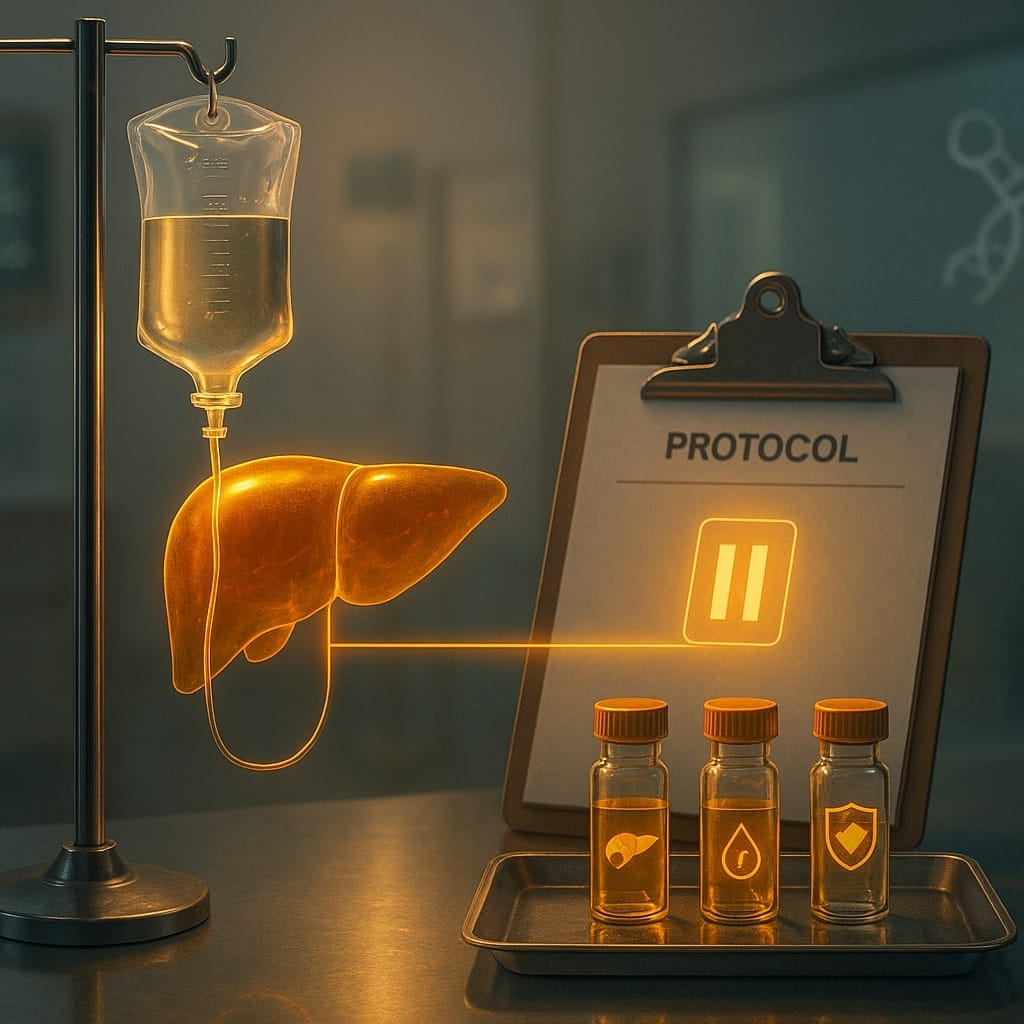
Intellia Therapeutics has temporarily paused dosing and screening in its two Phase 3 MAGNITUDE trials of nexiguran ziclumeran (nex-z; formerly NTLA-2001) after a participant in the cardiomyopathy study developed Grade 4 transaminase elevations with increased total bilirubin and was hospitalised. The event, reported on October 24 in a patient dosed September 30, triggered the protocol’s pausing criteria. As of the company’s update, >650 patients were enrolled in the ATTR-CM study and 47 in the ATTR-PN study; Intellia estimates >450 patients have been dosed with nex-z to date. The company says it is monitoring the patient, consulting outside experts and regulators, and assessing risk-mitigation steps before resuming enrolment.
Markets reacted immediately: Intellia shares fell ~40–46% on the news. Management told investors there is no FDA clinical hold at this time and that the team is “actively engaging with the agency” on a path to restart.
On a same-day analyst call, management indicated the timing and pattern of injury suggest the issue may be specific to the TTR-knockout programme rather than the lipid-nanoparticle (LNP) delivery platform, and noted the HAE programme (lonvoguran ziclumeran; NTLA-2002) continues as planned.
The clinical signal in plain English
The company’s description—very high ALT/AST plus a rise in total bilirubin—meets what regulators call a “Hy’s law” profile, a classic warning sign for serious drug-induced liver injury (DILI) once alternative causes and cholestasis are ruled out. Hy’s law isn’t a verdict, but it is the kind of signal that moves sponsors and regulators to pause, investigate and, if feasible, restart under tighter monitoring.
Product vs platform: the nub of the risk
Investors will care less about a short operational pause and more about what biology is speaking here:
- If target- (or drug-) specific: The safety signal is confined to TTR gene inactivation in the liver. That would leave Intellia’s other in-vivo programs (e.g., lonvo-z for hereditary angioedema, which targets KLKB1) largely unaffected, beyond the sector-wide optics.
- If platform-linked: A mechanism tied to LNP delivery or CRISPR editing per se would cast a longer shadow across all in-vivo liver programs—not just Intellia’s. Management’s early read-through, based on timing (signal appearing weeks, not days, post-dose), points away from an acute LNP reaction. But causality will hinge on full work-up and adjudication.
Competitive backdrop has shifted since 2024
When nex-z entered late-stage testing, the therapeutic bar for ATTR cardiomyopathy (ATTR-CM) was already rising. In November 2024, BridgeBio’s acoramidis won US approval as Attruby, with near-complete TTR stabilisation (≥90%) highlighted on label and subsequent data reinforcing cardiovascular benefit. Regulatory dossiers in the UK, EU and Japan followed in 2025.
In March 2025, Alnylam’s AMVUTTRA (vutrisiran) secured US approval for ATTR-CM, extending RNAi’s reach from neuropathy into cardiomyopathy and offering a twice-yearly injection alternative to daily stabilisers.
That matters because nex-z’s value proposition—a single-dose, one-and-done edit with deep, durable TTR knock-down—must now be assessed against approved, increasingly effective chronic therapies. Earlier-phase data for nex-z showed consistent ≥90% TTR reduction, underpinning the thesis that one infusion could obviate years of treatment. A safety overhang changes the calculus for patients, physicians and payers.
What regulators will look for next
Hy’s law cases trigger a familiar regulatory checklist:
- Causality — Was the injury drug-related after excluding viral, ischemic, obstructive and drug–drug causes?
- Pattern — Is the signal idiosyncratic or reproducible; are there predictors (age, comorbidities, baseline labs, concomitants)?
- Mitigations — Can dosing, pre-medication, monitoring schedules (e.g., weekly LFTs for longer), or exclusion criteria reduce risk to an acceptable level in Phase 3 and beyond?
- Labelability — If the efficacy is compelling, is the risk manageable via warnings, REMS, or post-marketing commitments?
The FDA’s DILI guidance makes clear that ALT/AST ≥3× ULN with bilirubin >2× ULN—absent cholestasis—warrants heightened concern and strong, protocol-level responses, such as the pause Intellia executed.
Investor lens: three scenarios to model
Base case (procedural pause, restart with guardrails).
The safety event is adjudicated as drug-related but idiosyncratic, with re-consent, tighter LFT surveillance, longer follow-up windows and possibly dose-management rules. Enrolment resumes within weeks to a few months; timelines slip modestly. This assumes no additional Hy’s-law cases emerge.
Adverse case (partial hold/dose rethink).
If investigations suggest class-like liability for deep TTR knock-down at current dose, Intellia may amend dosing (e.g., lower dose with preserved TTR suppression) or re-stratify higher-risk subgroups (very elderly, specific comorbidities). That stretches timelines and adds CMC and statistical complexity.
Bear case (broader overhang).
A mechanistic link implicating delivery or editing would cast doubt on in-vivo liver CRISPR generally, pressuring valuations across the sub-sector until independent programs (other sponsors) show clean safety at scale. Narrative-wise, note that management explicitly said it has not been informed of an FDA clinical hold, which is supportive of the base-case view—for now. @alekhyaharika
Read-across to Intellia’s pipeline
The company emphasises that lonvoguran ziclumeran (lonvo-z; NTLA-2002) in HAE—a one-time KLKB1 knockout—is unaffected. That programme completed Phase 3 enrolment in September and previously showed durable attack-rate reductions with a favourable safety profile over multi-year follow-up. If the TTR signal proves program-specific, lonvo-z could anchor the equity story while MAGNITUDE investigations continue.
The bigger picture for gene editing
For the CRISPR field, this is a first late-stage “gut check” for in-vivo systemic editing at commercial scale. The sector has long argued that one-time edits can compress lifetime drug spend and simplify care. That argument survives a single safety event, but durability vs safety will be scrutinised more harshly—especially with viable chronic alternatives already on the market in ATTR-CM. The clinical bar has moved; the safety bar has not.
What we’ll watch next (near-term)
- Case work-up readout: Does the injury resolve without transplant; do data exclude alternative causes? (Company and DSMB updates)
- Protocol changes: New monitoring cadence, exclusions, dose tweaks filed with regulators.
- Any signal in MAGNITUDE-2 (ATTR-PN): The parallel pause is precautionary; confirmation that no similar cases appear would support a restart.
- Competitor momentum: Attruby (acoramidis) and AMVUTTRA (vutrisiran) execution—labels, outcomes updates, pricing/access—define the commercial bar nex-z must clear.
Bottom line
Nex-z still offers something unique: a single infusion that can silence TTR for years. But Hy’s-law-like liver injury is a serious signal that Intellia and regulators must de-risk before the programme can credibly compete with already-approved options in ATTR-CM. The near-term equity path will depend on whether this is a solvable product-specific safety problem—or an early warning that in-vivo liver editing at scale needs tighter control than anyone modelled.